One Truck, Three Menus: How to Match Your Menu to the Event
Published July 25, 2026 by EZ Food Trucks
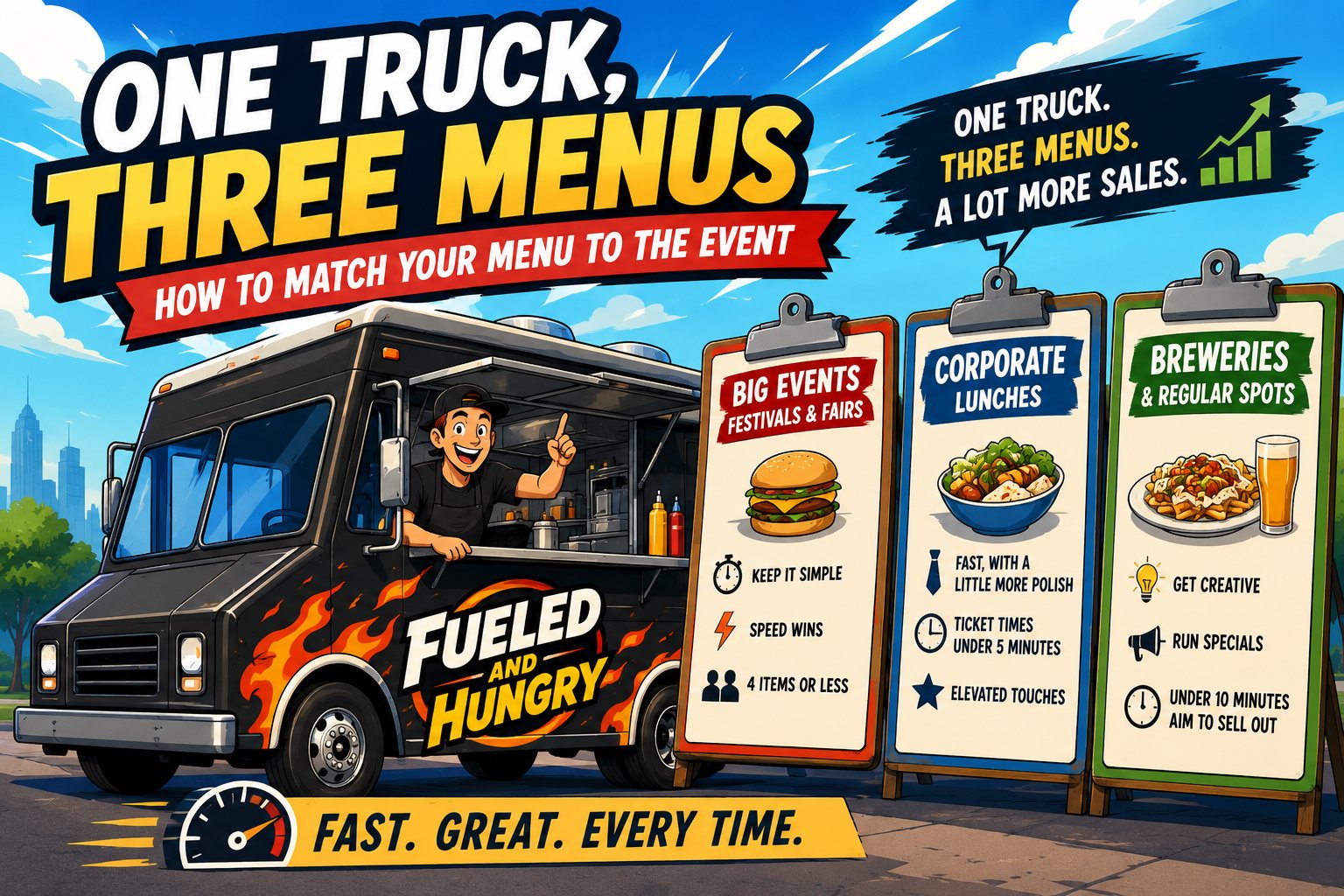
Not all events are the same. A festival crowd wants different things than an office lunch crowd. So why would you serve them from the same menu?
Every food truck should have a few versions of its menu, each built for a different kind of event. But no matter which menu you're running, two rules never change: the food has to come out fast, and it has to be great. Nobody wants to wait 20 minutes for food from a food truck. Not at a festival, not on a lunch break, not anywhere.
Here's how to build the right menu for the three most common types of events.
Big Events, Festivals & Fairs: Keep It Simple
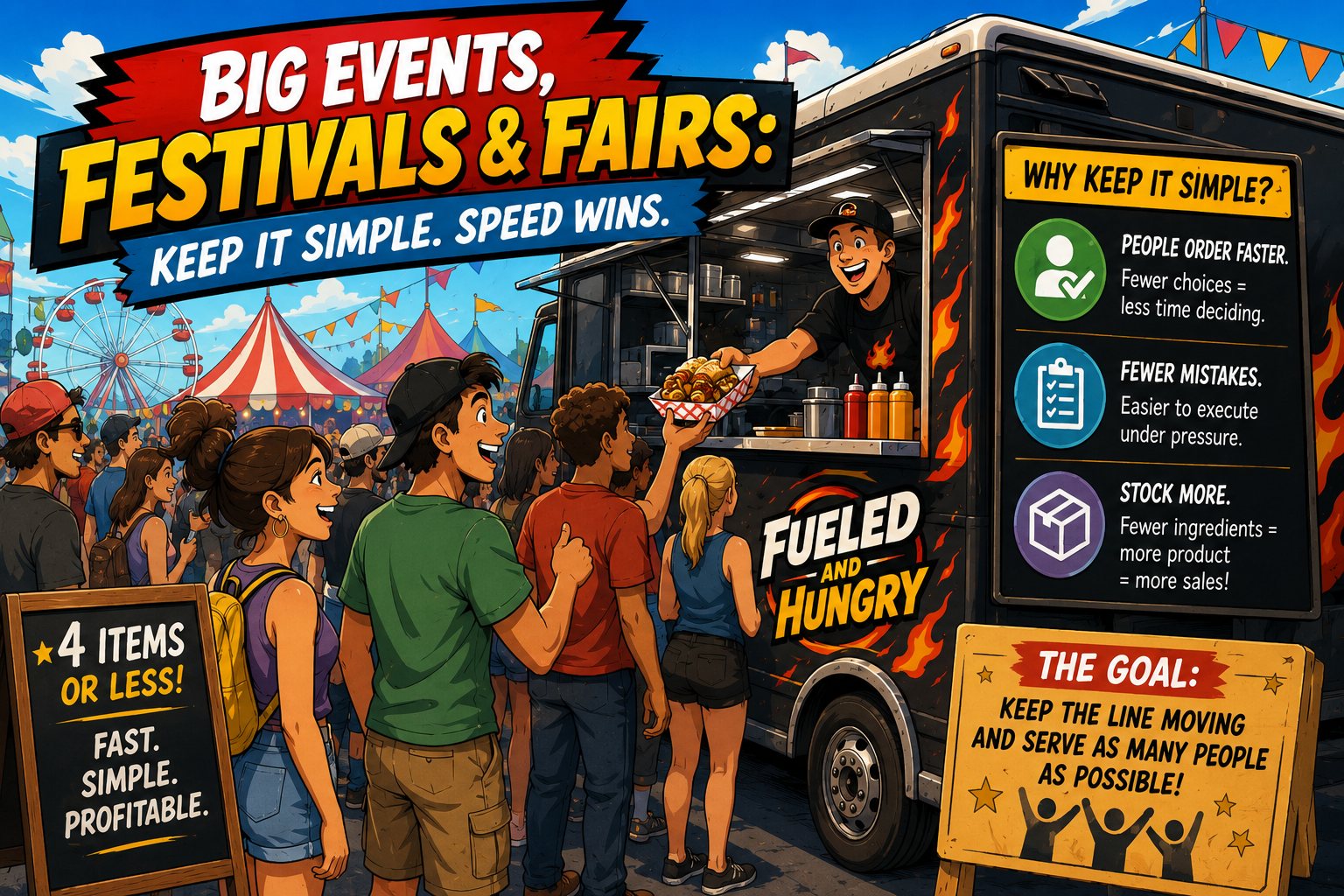
The goal at a big event is simple: get as many people through your line as possible, as fast as possible. Nobody goes to a festival hoping to stand in line. They're there to have fun. Every minute they spend waiting on you is a minute they're not enjoying the event — and they know it.
Keep your menu to 4 items or less. Pick your four best and fastest items. A short menu helps you in three big ways:
- People order faster. Fewer choices means less time deciding at the window.
- You make fewer mistakes. A simple menu is easier to execute under pressure.
- You can stock more product. Fewer menu items means fewer ingredients. If you only need 6 ingredients to make your whole menu, your cold storage can hold a lot more of each one. More product on the truck means more sales before you run out.
Speed is everything
I can't stress this enough. At a big event, you'll get one or two rush windows during the day. That 1-to-3-hour rush is where you make your money. If your line isn't moving, people walk to the next truck. But it works the other way too — when people see your line moving fast, more of them get in it.
Think about the math. If your ticket times are 15 minutes and each customer takes 1–2 minutes just to order, there's a hard limit on how many people you can serve. Now flip it: keep ticket times to 2–3 minutes during slow periods and 5–6 minutes during the rush, and get each guest ordered and paid in 30 seconds or less. The number of meals you can serve goes up fast — and so do your sales.
Simple doesn't mean boring
You still want variety. The trick is to cross-utilize your ingredients — build lots of options out of a small set of items.
Here's how it works on my cheesesteak truck. Ordering is a 3-step process:
- Pick your protein: steak or chicken
- Pick your style: sandwich or rice bowl
- Pick your flavor: Philly, Korean, or Buffalo
That's 12 different menu options — but it only takes 8 ingredients to make all of them: steak, chicken, onions, jalapeños, cheese, Buffalo sauce, Korean sauce, and my seasoning. Guests order in seconds, the line flies, and we serve 80–90 people an hour. That makes us one of the highest-grossing trucks at every festival we work. That's where you want to be.
💡 Menu Tip: MAKE IT BIG! Think banner-sized menu. At a large event, you need to capture people's attention from a distance. Your menu should be readable from the back of the line — even from across the walkway. When people can read your menu from 30 feet away, they decide what they want before they reach the window. That keeps orders down to seconds. A big, bold menu also pulls in the crowd that's still deciding which truck to pick. Small print on a little sign next to the window? That's a line-killer.
Corporate Lunches: Fast, With a Little More Polish
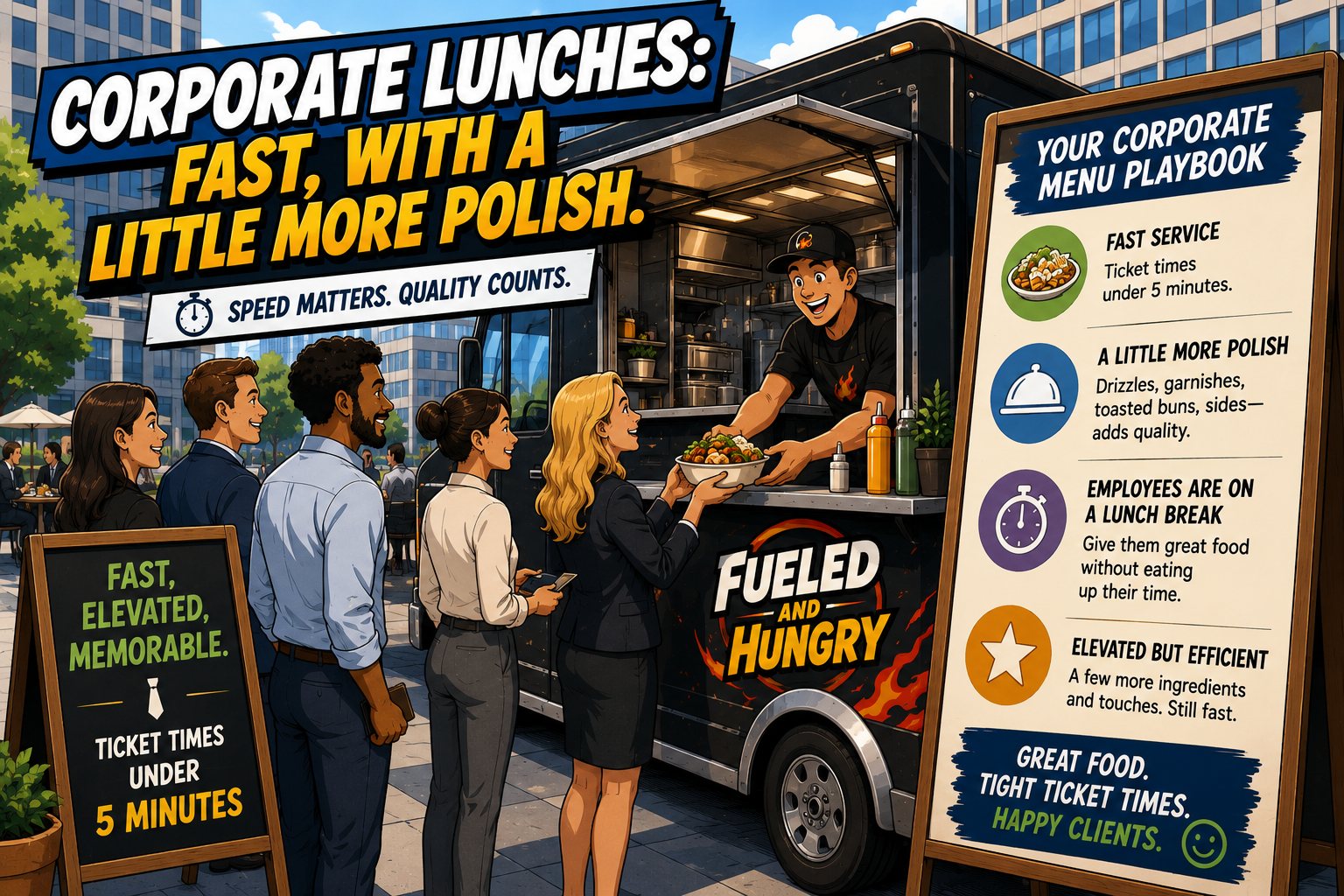
Most corporate lunches run 1–2 hours, and speed still matters — a lot. Most employees only get 45 minutes to an hour for lunch. They don't want to spend their whole break waiting on food and then rushing to eat it.
You have a little more breathing room than at a festival, but keep ticket times to 5 minutes or less.
Your corporate menu should look a lot like your big-event menu, but it can be a little more elevated. That means a few more ingredients and a few more touches per dish. A "touch" is any extra step that goes into finishing a plate — a drizzle of sauce, a fresh garnish, a toasted bun, a side that takes an extra step. Each touch adds quality, but each one also adds time. At a festival, you cut touches to keep the line moving. At a corporate lunch, you can add a couple back in to make the meal feel special — as long as your ticket times stay tight.
💡 Menu Tip: SEND IT AHEAD. Get your menu to the event organizer a few days early and ask them to share it with the team. Most companies will blast it out by email or Slack. When employees show up already knowing their order, your line moves twice as fast — and nobody burns their lunch break deciding.
Breweries, Parking Lots & Regular Spots: Get Creative
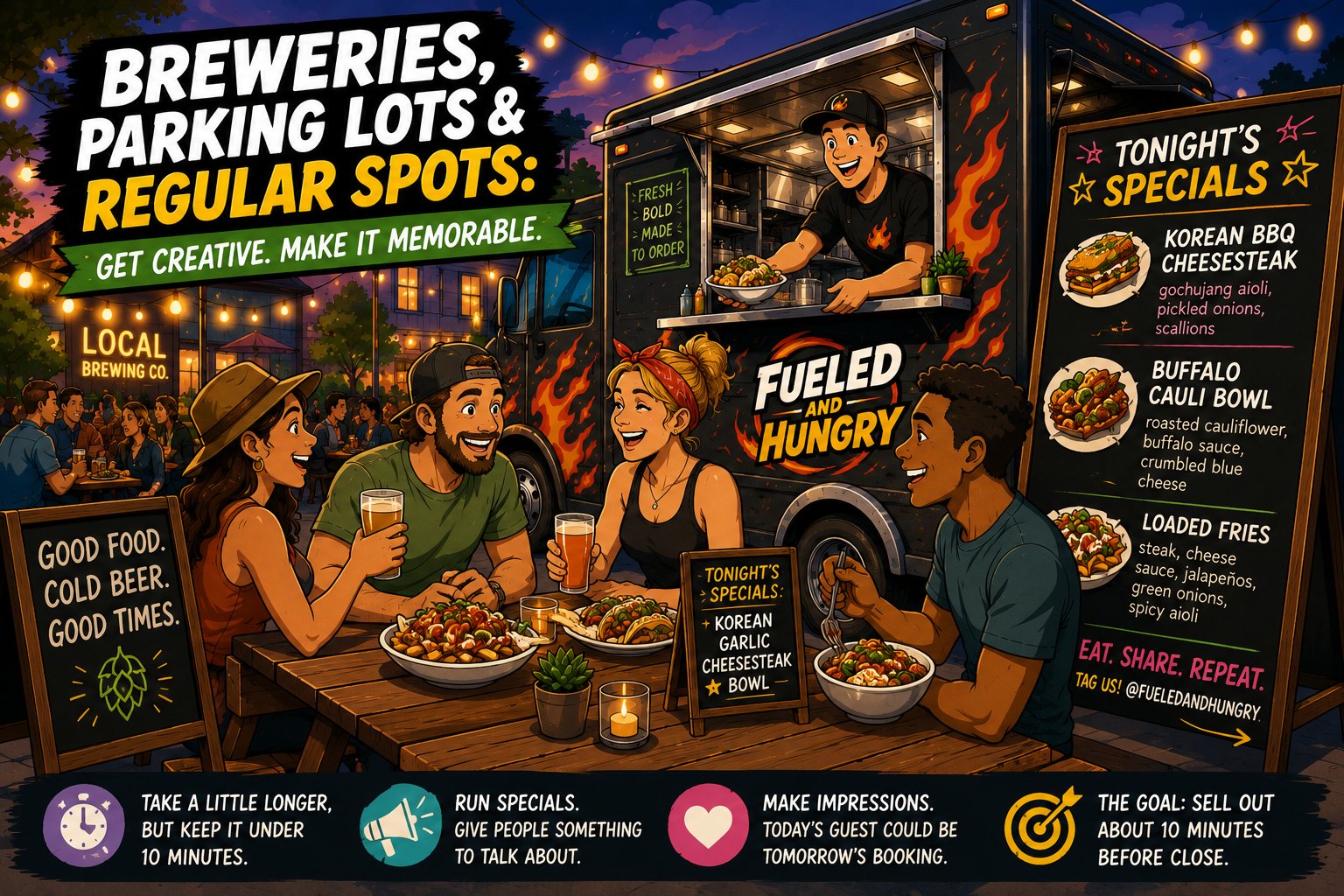
This is where you can — and should — have the most fun with your menu.
At a brewery or a neighborhood spot, most people aren't in a hurry. They came to hang out, relax, and spend some time. This is the place for specials that draw people in and give you something to promote on social media. Dishes can take a little longer here, but 10 minutes or less should still be the goal.
Even with a creative menu, stay efficient. Cross-utilize your ingredients just like you do at festivals so nothing goes to waste.
One warning: sales at these spots can swing wildly from one night to the next. Be careful about how much product you bring, especially at a new location. The dream is to sell out every night, about 10 minutes before closing. It won't happen every time, but that's the target — all your product sold, almost nothing wasted.
One more thing: these events aren't just about tonight's sales. Your menu here should be exciting and really represent your truck, because you're making impressions. Tonight's happy customer might book you for their company party, their wedding, or their festival — or just become a regular. Every plate is an ad for your truck.
💡 Menu Tip: POST IT, PRINT IT, AND FEED THE BARTENDER. Use a board you can change — chalkboard or letter board — so tonight's special gets top billing. Post the special on social media before you roll out. A photo of tonight's dish with "only at [brewery] tonight" gives people a reason to show up — and gives the brewery something to reshare.
Then work the room. Before service starts, print out menus and drop them on every table and along the bar. People order more when the menu is sitting right in front of them with their beer.
And here's my favorite move: bring the bartenders a free meal. Bartenders talk to every single customer in the building. When they've tried your food and love it, they become your best salespeople — "you've got to try the truck outside" coming from the bartender is worth more than any ad you could buy.
The Bottom Line
- Festivals: 4 items or less. Speed wins. Cross-utilize ingredients so you can stock deep and serve fast.
- Corporate lunches: Same idea, slightly elevated. Ticket times under 5 minutes.
- Breweries and regular spots: Get creative, run specials, aim for under 10 minutes — and try to sell out by close.
One truck. A few smart menus. A lot more sales.
Book a food truck for your event · List your food truck free